info@directchinaguide.com
ads@directchinaguide.com

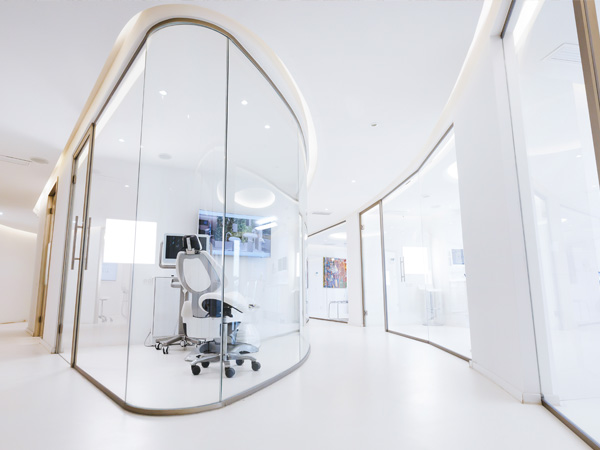

Deciding to travel to China for advanced dental care is an excellent, cost-effective choice. However, the key to a stress-free and successful medical journey lies in meticulous preparation. Unlike a standard vacation, a dental tourism trip requires aligning your travel logistics perfectly with a highly structured clinical timeline.
From your first virtual consultation to the moment you step out of a state-of-the-art clinic with a restored smile, this practical checklist guides you confidently through each step of the journey.
Step 1: Remote Assessment (Pre-Trip Planning)
Your medical journey begins long before you pack a bag. Establishing a digital baseline ensures your on-site treatment moves efficiently from day one.
- Gather Dental Records: Request recent panoramic X-rays, 3D Cone Beam Computed Tomography (CBCT) scans, and clear digital photographs of your teeth from your local dentist.
- Virtual Consultation: Top international dental departments in China provide digital intake channels. You will upload your files to a secure patient portal, allowing their clinical teams to analyze your bone density, structural needs, and tissue health.
- Preliminary Treatment Plan: The clinic will issue a detailed, line-item treatment blueprint. This document outlines estimated costs, recommended procedures, and—most importantly—the exact number of days required on the ground.
Step 2: Navigating China’s Visa Policies
China’s border entry policies have become remarkably flexible for international travelers, making short-term medical transit easier than ever. Depending on your origin and length of treatment, you will typically use one of three pathways:
1. Unilateral 30-Day Visa Exemption
As of 2026, ordinary passport holders from over 50 countries—including the UK, Canada, Australia, New Zealand, Japan, and the vast majority of the European Union—enjoy completely visa-free entry for up to 30 days. If your treatment falls within this timeframe, you can book your flight and enter hassle-free.
2. The 240-Hour (10-Day) Visa-Free Transit
If you hold a passport from an eligible country (such as the United States) that does not qualify for the 30-day waiver, you can utilize the upgraded 240-hour visa-free transit program.
- The Condition: You must possess a confirmed onward ticket to a third country or region (e.g., Los Angeles $\rightarrow$ Shanghai $\rightarrow$ Tokyo or Hong Kong). This grants you 10 full days to complete mid-range procedures like crowns or veneers without an advance visa.
3. The Traditional Tourist Visa (L Visa)
If your passport is not on a visa-free list and you require an extended stay, you can apply online through the Chinese Online Visa Application (COVA) system for a standard L Visa. The clinic’s international department can provide a formal invitation letter to expedite your consulate approval.
Step 3: Selecting Your Dental Destination Hub
Most international dental tourists flock to China’s tier-one medical powerhouses, each offering unique regional and logistical advantages:
- Shanghai: The epicenter of international dental care. Shanghai boasts the highest density of JCI-accredited clinics, Western-educated bilingual specialists, and cutting-edge digital labs. It is the ideal choice for highly complex full-mouth rehabilitations.
- Shenzhen: Positioned immediately adjacent to Hong Kong, Shenzhen is an ultra-convenient tech hub. Many patients fly into Hong Kong, take the seamless 14-minute high-speed rail directly across the border, and access top-tier digital implant centers at lower operational costs than Shanghai.
- Beijing: Excellent for patients who want to blend world-class orthodontic or restorative care at prestigious Grade-3 medical institutions with cultural exploration of China’s historic landmarks.
Step 4: Mapping Your Clinical Timelines
Understanding how long you need to stay prevents rushing critical healing phases. Below is a realistic breakdown of timelines for common procedures utilizing modern, on-site CAD/CAM digital labs:
| Dental Procedure | Required Days on Ground | Trip Blueprint |
| Porcelain Veneers / Crowns | 3 to 7 Days | Includes initial intraoral scanning, digital modeling, on-site milling, and final cosmetic bonding. |
| Single Implant (Same-Day / Immediate Load) | 5 to 10 Days | Appropriate only for patients with pristine bone density. The implant is placed, and a temporary CAD/CAM crown is attached in one trip. |
| Traditional Two-Stage Implants | Two separate trips of 5–7 days (Spaced 3–6 months apart) | Trip 1: Extraction, bone grafting (if needed), and fixture surgical placement. Trip 2: Osseointegration check, abutment placement, and permanent crown fitting. |
| All-on-4 Full-Arch Reconstruction | 7 to 14 Days (Per phase) | Requires comprehensive initial surgical placement followed by structured recovery checks to ensure structural stability before flying. |
Step 5: Essential On-the-Ground Logistics
To ensure your daily commute from your hotel to the dentist is entirely seamless, set up your digital toolkit prior to arrival:
- Payment and Communication Apps: Cash and physical credit cards are rarely used in modern Chinese hubs. Download WeChat or Alipay and bind your international credit card to handle local transactions.
- Navigation & Transit: Download DiDi (China’s primary ride-hailing app, which features built-in English translation) to easily call rides directly to and from your clinic.
- Accommodation Tip: Book a hotel within walking distance or a short subway ride of your clinic. Your body will appreciate a quick, comfortable return to your room immediately following extensive oral surgery.
By checking off these logistical boxes ahead of time, you can step off the plane focused entirely on what matters most: your health and your new smile.
China Transit Visa Guidelines provides a practical framework for mapping out transit routes and understanding regional boundaries when maximizing the visa-free entry windows available for international travelers.